Online Learning vs. In-Person Classes: The Real Criteria for Choosing What's Best for Your Child, Based on Their Learning Style.
Whether online learning or in-person classes are more effective depends not on the "school" itself, but on the child's learning style and environmental conditions. Instead of making a general claim that "online learning is better," it's crucial to analyze the child's concentration type and self-directed learning abilities, and then determine how to design the home learning environment. While online classes offer technological convenience and flexibility, they can actually decrease learning efficiency if the child lacks the ability to plan and concentrate independently. Conversely, in-person classes provide a consistent rhythm and social interaction, but can lead to decreased concentration if they don't align with the child's emotional state or learning style. Therefore, it's important to determine "In what conditions does my child learn best?" rather than simply choosing between "A vs. B."
Comparing Based on Learning Style and Environment
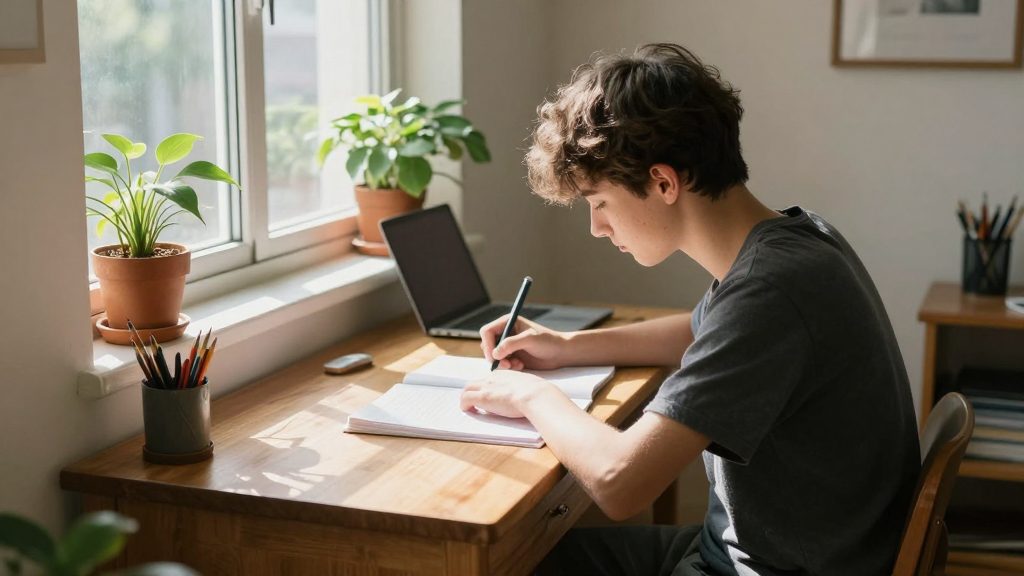
1. Ability to Maintain Focus: Autonomy vs. Structure
- Online learning offers flexibility in time and location, which can be a burden for children who need a set schedule. In particular, students with underdeveloped self-directed learning skills (e.g., younger elementary school children) are more likely to lose focus. They need to organize their study time and create a plan before starting, which can be overwhelming. In contrast, in-person classes take place at a fixed time and location every day, which helps maintain a consistent rhythm. This provides stability for students with poor self-regulation skills and is conducive to maintaining focus.
- Key Checkpoint: If your child can concentrate and complete problems for more than 30 minutes, or if they struggle to set their own study times, in-person classes may be more suitable.
2. Quality of the Learning Environment: Presence of Distractions
- Online learning is heavily influenced by the home environment. Family conversations, TV noise, and smartphone notifications can all be distractions. Especially when parents are working simultaneously, if the learning space is not separated, children are easily exposed to distractions. In contrast, in-person classes provide a dedicated learning space, and children learn in an environment where they are focused along with their teachers and classmates. This is a crucial factor for children who are sensitive to environmental noise.
- Practical Suggestion: If you choose online classes, clearly separate a dedicated space for your child to study and consider having parents temporarily hold onto their smartphones.
3. Interaction with Teachers: Level of Feedback and Emotional Connection
- In in-person classes, teachers can directly interact with students, allowing them to immediately assess their emotional state and understanding based on facial expressions and tone of voice. Students can ask questions directly and receive feedback more accurately than through text. This emotional connection with the teacher is particularly important for children who need emotional stability or are struggling with their studies.
- In contrast, online classes may experience delayed feedback or misunderstandings due to inaccurate communication. For example, if a teacher's words are distorted by audio processing errors or messages arrive late, children may feel anxious about "not understanding correctly." This can also decrease their motivation to learn.
- Practical Judgment Criteria: Check if your child frequently expresses feelings of "wanting to ask the teacher a question, but not knowing how." If so, in-person classes may be a more stable choice.
4. Learning Rhythm and Self-Management Skills: Consistency of Schedule
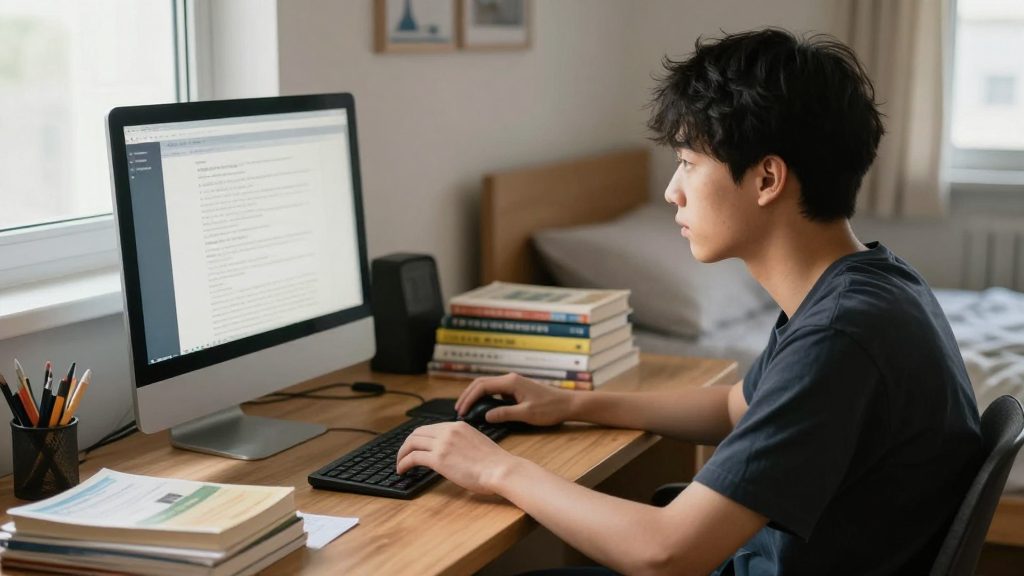
- Online learning often involves classes three times a week for two hours. This requires students to manage their schedules independently. If your child lacks the habit of setting aside time for studying and concentrating during that time, their class schedule may be delayed or they may not complete enough material. This depends on the child's level of self-direction and time management skills.
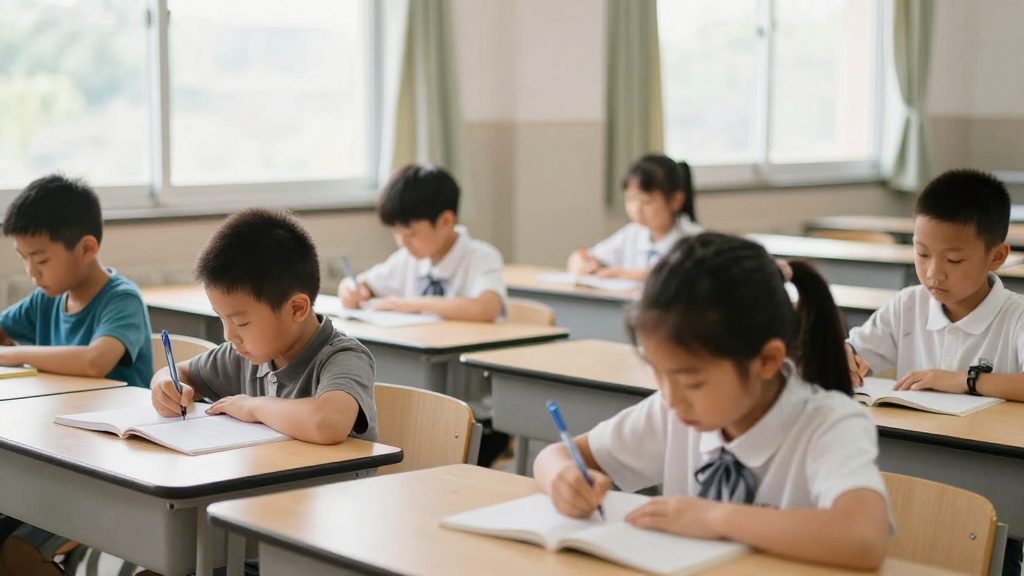
- In contrast, in-person classes take place at a fixed time, so children naturally develop an awareness of "going to school today." This helps maintain their schedule and allows them to learn in a consistent rhythm. This rhythm itself is a foundation for learning, especially for children whose learning habits are not yet established.
---
| Comparison Item | Online Learning | In-Person Classes |
|---|---|---|
| Ability to Maintain Focus | Difficult if lacking self-direction. Vulnerable to environment. | Easier to maintain focus with fixed time and location. |
| Stability of Learning Environment | Many distractions at home (noise, smartphones). | Dedicated classroom environment minimizes external stimuli. |
| Interaction with Teachers | Delayed feedback, lack of non-verbal communication. | Immediate response, possibility of emotional connection. |
| Maintenance of Learning Rhythm | Requires independent schedule management; can lead to decreased learning if lacking. | Classroom acts as a "clock," maintaining the schedule. |
| Most Suitable Type | Children with high self-direction and ability to control their environment. | Children who need emotional stability and are accustomed to schedules. |
---
Recommended For:
- If your child can independently set aside time for studying and concentrate for more than 15 minutes, utilizing online learning to maximize flexibility in time and location is a practical approach. This is particularly suitable for children with a "autonomous and independent" learning style, especially if parents have the capacity to provide some guidance.
- On the other hand, if your child frequently procrastinates or is easily distracted by changes in their environment, you should first consider in-person classes. Children who exhibit decreased motivation, lack of concentration, or emotional instability may find that the consistent rhythm and social interaction in a classroom are essential for their learning recovery.
- Another important factor to consider is the quality of the home learning environment. If parents can dedicate time to study with their child and a dedicated space is available, online learning can be successful. However, if parents are working simultaneously or there is a lot of noise at home, in-person classes may actually be more effective for learning.
---
Ultimately, it's impossible to definitively say that either online learning or in-person classes are "better." The decision must be based on a comprehensive analysis of the child's learning habits, emotional state, and home environment. The most important thing is to understand "In what kind of environment can my child thrive?" While technology will continue to advance, a child's learning style and environment tend to remain relatively consistent. Choosing based on the child's current state is the most practical and effective learning strategy in the long run.
Related posts

5 Causes of Decreased Academic Focus and Strategies for Improvement: Effective Approaches Used in Educational Settings.

How can we completely prevent students from falling behind in school?

How to effectively manage your time in school.
How can I make up for the time missed in school classes?
Popular posts
5 Causes of Decreased Academic Focus and Strategies for Improvement: Effective Approaches Used in Educational Settings.
How can we completely prevent students from falling behind in school?
How to effectively manage your time in school.
Comments 0