How to effectively manage your time in school.
School life is about more than just getting good grades. It's a reality where you have to juggle assignments, test preparation, extracurricular activities, and personal time. If you don't manage your time effectively, stress will build up at some point. This is especially true for 3rd-year middle school students and 1st or 2nd-year high school students, as academic pressure increases and they begin exploring career paths and developing self-directed learning skills. This article provides specific, practical, step-by-step methods for implementing "sustainable time management" in your daily school life, going beyond simple planning.
Step 1: Define "Today's Top 3 Tasks" Every Morning
Every morning, the most important thing is to take time to "gather" your assignments and learning goals. Simply sitting down at your desk and writing down the tasks you need to accomplish for the day can help clear your mind. The key is not to list "everything," but rather to identify the top 3 things you absolutely need to complete today. For example:
- Complete math homework problems 1-3 (essential)
- Memorize and check 20 English words (goal)
- Solve Korean language reading comprehension questions 4-6 (preparatory work)
By focusing on these 3 tasks, you can handle the rest of your responsibilities as opportunities arise. Simply being aware of "what you need to do today" can increase your concentration by over 20%.
Tip: Writing down "Today's Top 3" on a sticky note or in a simple planner signals to your brain that "you need to take care of these tasks." This small action, repeated frequently, forms the foundation for self-directed habits.
Step 2: Divide "Work Time" and "Break Time" in 30-50 Minute Intervals
Prolonged concentration is unrealistic. Your brain naturally loses energy after about 30-50 minutes of focus. Therefore, the key is to break down your time into appropriate intervals. For example:
- 30 minutes of focus → 5 minutes of break (April style)
- 45 minutes of focus → 10 minutes of break (realistic for learners)
This structure is often called the "Pomodoro Technique," but the habit of breaking down time is more important than the exact timing. During breaks, it's perfectly fine to look at your phone or gaze out the window. The important thing is that when you return from your break, your concentration is restored.
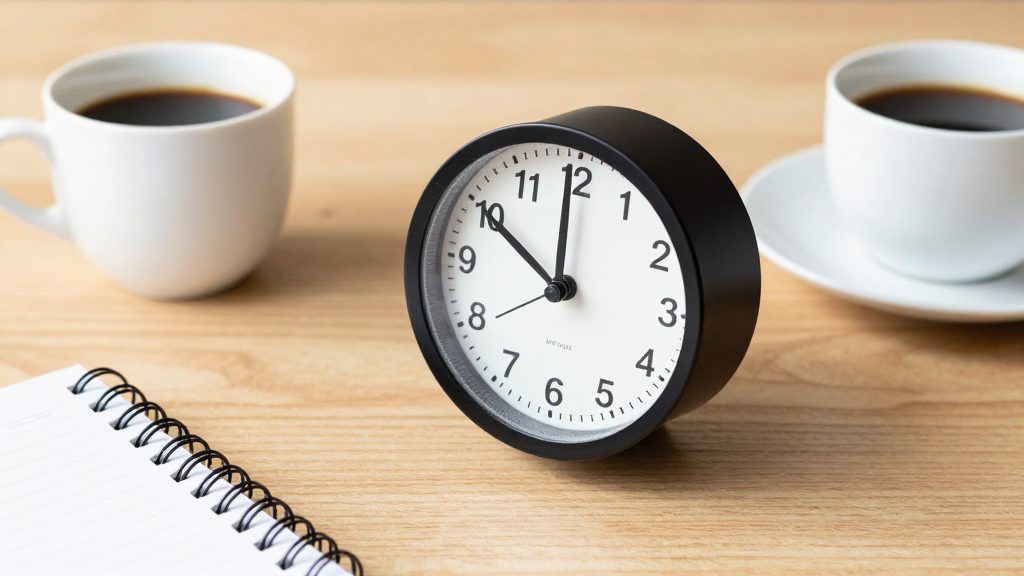
Tip: Adding a small action (e.g., drinking water, shaking out your hands) that you promise to do when you "restart" during your break can reduce the time it takes to get back into focus after a break.
Step 3: Review Your "Weekly Goals" Through Self-Assessment

On Sunday evening or Monday morning, take time to reflect on the past week. The important thing is not whether you "completed everything," but rather to honestly reflect on *why* you may not have completed certain tasks. Instead of a simple checklist, evaluate yourself using the following questions:
- What was the reason for starting late? (e.g., why did you procrastinate on an assignment?)
- What obstacles interfered with your concentration? (e.g., conversations with friends, phone notifications)
- What was the most effective time management strategy you used?
Simply answering these questions will improve your self-awareness and reduce the likelihood of repeating mistakes in the following week. Self-assessment is not about "penalties," but rather a tool for improving your learning habits.
Step 4: Plan Your Day by Separating "Reading" and "Writing" Activities
Many students try to do activities like "reading" or "essay writing" at the same time. However, since reading and writing use different areas of the brain, it's more efficient to separate these two activities.
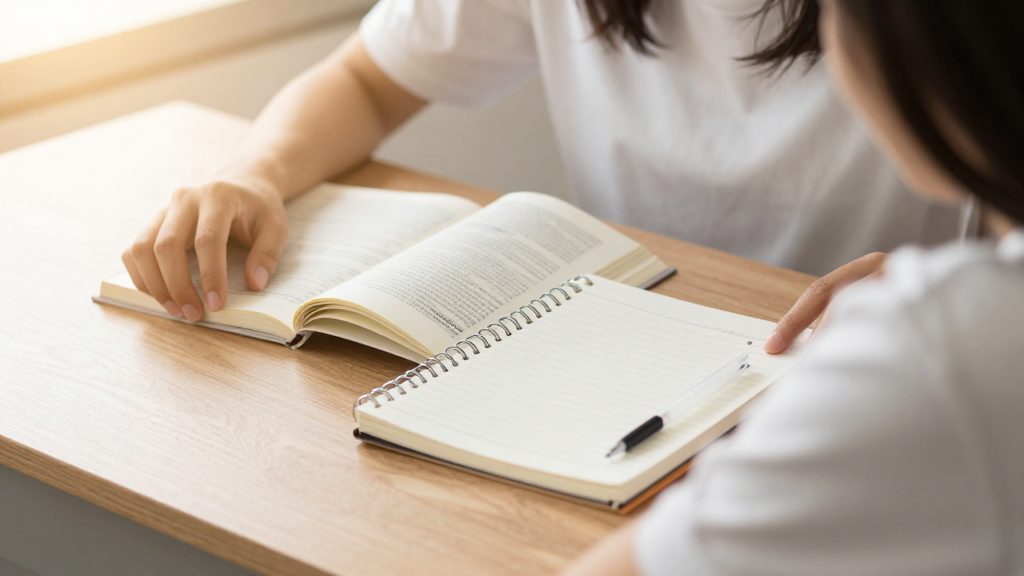
- 9:00 AM - 10:00 AM: Reading (e.g., reading a textbook, analyzing a passage)
- 3:00 PM - 4:00 PM: Writing (e.g., writing a summary, practicing essay writing)
By separating these activities, you can focus on applying what you've read in your writing. This prevents "information overload" and reduces productivity loss. Especially before exams, separating reading and writing can increase learning effectiveness by over 15%.
Step 5: Create a "Contingency Plan" (Exception Handling Strategy)
Everyone's plans are disrupted by unexpected situations. This could be a sudden announcement at school, a request from a friend, or simply feeling unwell. To prepare for these situations, you need to create a "contingency plan."
- Exception 1: The day before a midterm, a friend invites you to an event → "Stick to the study schedule you've already planned."
- Exception 2: You can't concentrate → "Take a 5-minute break and then start again" (restart the Pomodoro).
- Exception 3: You haven't finished an assignment → "Study for an additional 30 minutes tomorrow morning" (compensatory approach).
Having a pre-defined response logic for these exceptions will reduce the regret caused by making decisions in the heat of the moment.
Managing time in school is about more than just "making a plan." It's about understanding your own concentration rhythms, emotional state, and daily environment, and adapting your plan accordingly. By consistently defining your top 3 tasks each day, breaking down time into intervals, and reflecting on your week, you'll find that even with the same amount of studying, you have more mental space and a greater sense of accomplishment. Managing your time is the first step towards taking responsibility for your own life.
Related posts

5 Causes of Decreased Academic Focus and Strategies for Improvement: Effective Approaches Used in Educational Settings.

How can we completely prevent students from falling behind in school?

How can I make up for the time missed in school classes?

Online Learning vs. In-Person Classes: The Real Criteria for Choosing What's Best for Your Child, Based on Their Learning Style.
Popular posts
5 Causes of Decreased Academic Focus and Strategies for Improvement: Effective Approaches Used in Educational Settings.
How can we completely prevent students from falling behind in school?
How can I make up for the time missed in school classes?
Comments 0